
Educational Gamification
Stop Customer Churn: How Your Loyalty Program Can Learn from Roguelike Games
Scroll ↓
TL;DR
Roguelikes hook people because every death is progress, every choice is a power-up, and every return unlocks something new. Apply this same thinking to your loyalty program and turn it from just another discount machine into something members genuinely want to engage with.
Loyalty? Or just the nearest reward?
One of the biggest challenges businesses face with loyalty programs is sustaining long-term customer engagement. Most customers nowadays are not loyal to the brand itself; they are loyal to whichever brand offers the best reward.
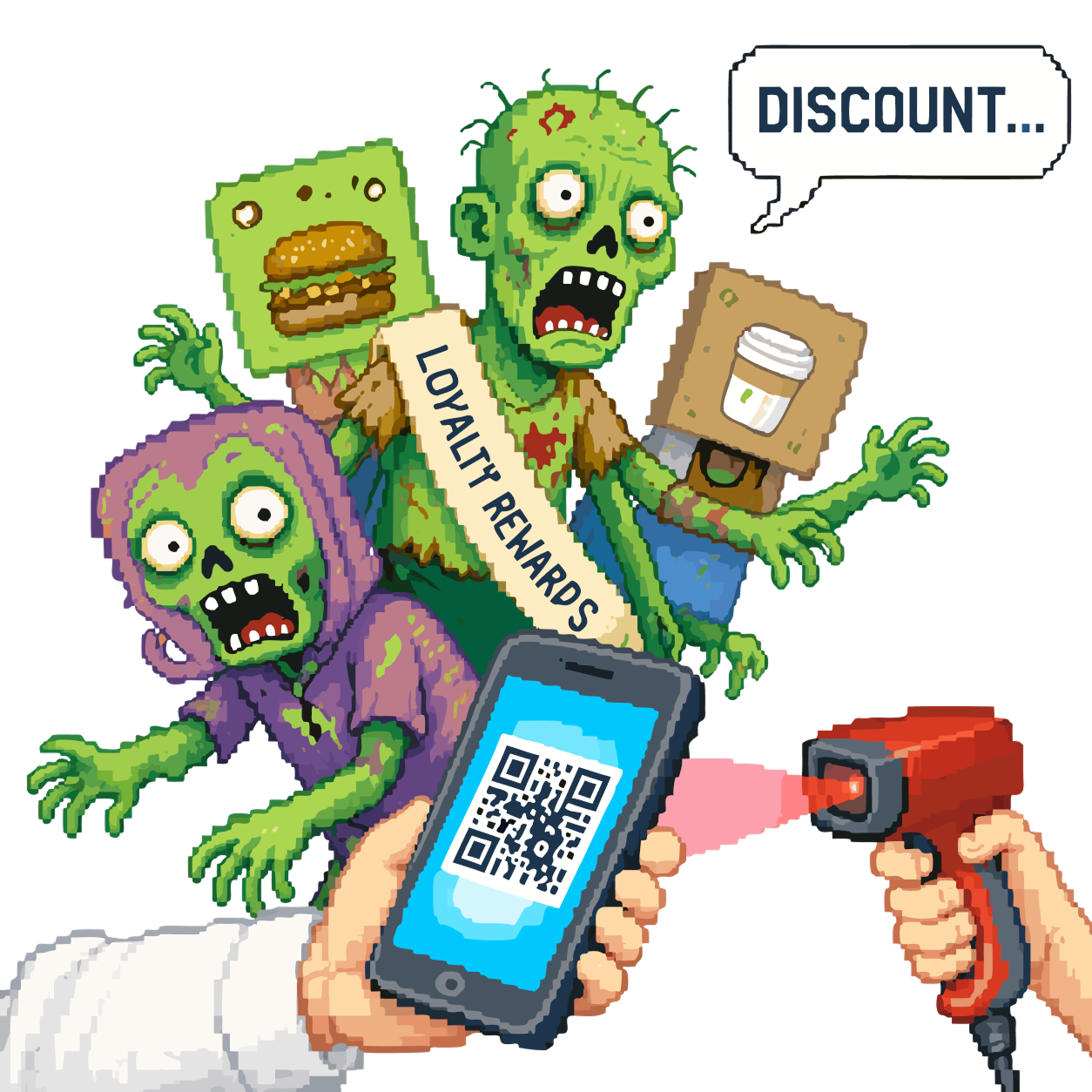
Yet many companies still expect that points, discounts, and welcome bonuses can create loyalty, when most loyalty apps become zombie apps on people's phones, opened only at the checkout counter to scan a QR code.
This is "putting the cart before the horse," or as the Chinese proverb says, 本末倒置 (běn mò dào zhì), which means reversing the cause and effect. Loyalty should happen before the purchase, guiding the customer to instinctively prefer you over the brand next door.
So how can you learn from roguelike games to build that kind of preference?
What roguelikes have that your program doesn't
A roguelike is a genre of game where players repeatedly die and start over, but become slightly stronger with every run. While this may sound far removed from loyalty programs, roguelikes have mastered one of the hardest problems in customer retention: how to keep people coming back voluntarily over and over again.
What makes these games so addictive is not just the gameplay itself, but the psychological loop behind it. Roguelikes combine three engagement mechanics that decades of behavioural research have linked to durable habit formation: variable rewards, player agency, and visible progression.
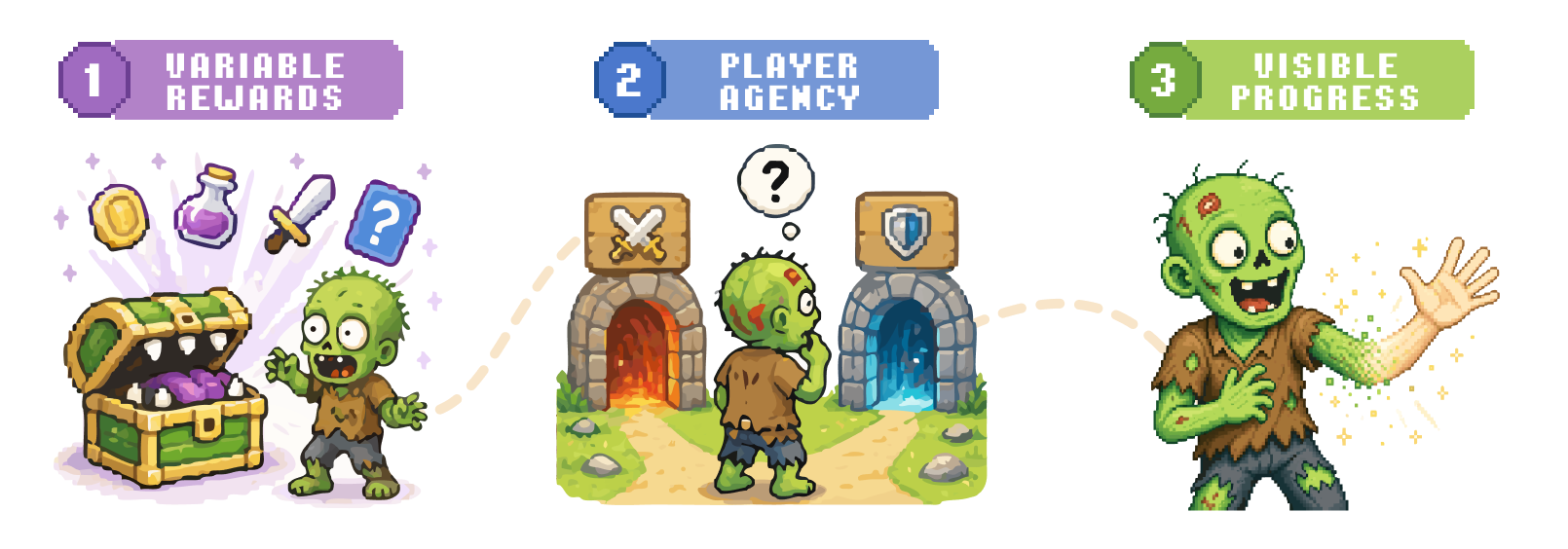
First, every run offers different encounters, upgrades, or rewards. Players never know exactly what they will get next, which creates anticipation and curiosity. This is the variable reward principle that B.F. Skinner identified in the 1950s, and it remains one of the strongest known drivers of repeat behaviour.
Second, players have meaningful agency and experience instant feedback. They can experiment with different strategies, optimise builds, and make decisions that shape each run. Autonomy of this kind sits at the core of Deci and Ryan's self-determination theory as a primary source of intrinsic motivation.
Third, progression is constantly visible. Even after failure, players unlock new powers, discover stronger weapons, or push slightly further into the dungeon than before. They work harder, time after time, as they approach the final boss. This is the goal-gradient effect proposed by behaviourist Clark Hull in the 1930s, where people increase their efforts to achieve a goal as they get closer to it.
Traditional loyalty programs offer none of the three. The reward is fixed. The progression is linear and slow. The agency is limited to "spend more, earn more." That structure produces reward dependency, which looks like loyalty in a dashboard but evaporates the moment a competitor runs a better promotion.

Roguelike games provide a useful counter-example because they combine all three mechanics into a tightly designed engagement loop. The same principles that have captivated billions of players worldwide can be applied to loyalty programs.

Beyond the core loop itself, here are three inspirations from three award-winning roguelike games that can inspire your loyalty program design.
Balatro: Skipping a reward can be the reward
{ Inspiration 01 }
Balatro is a poker-meets-roguelike that has sold over 5 million copies since 2024.
For every round, the player can take the blind and cash out, or skip the round and pick up a modifier (called a "tag") that supercharges a later round. Sometimes the tag is small. Sometimes it compounds and changes the entire run.
There the player sits, contemplating and strategising. Is it more beneficial to skip now, or take the blind and cash out?
The loyalty lesson:
Not every member wants the small, instant reward. Give them an alternative path that rewards playing the long game. Turn flat redemption into "save and stack" strategy play, or add a social layer where members can skip and gift their reward to a friend, unlocking a bigger future reward for themselves or earning entries into a grand prize pool.
Building strategic depth into your program gives members a sense of agency and ownership, and that personal investment is what makes them hard to walk away from.
Business Metrics
The first crucial element to define in the strategy dashboard is the business metrics. These metrics represent the end results that the client aims to improve. They should be quantifiable and prioritized based on importance. To assist SplashLearn in defining their business metrics, we ask questions such as “How do you measure your biggest success?” This helps align our design efforts with their business objectives and ensures that our design solutions directly contribute to measurable improvements.
Player
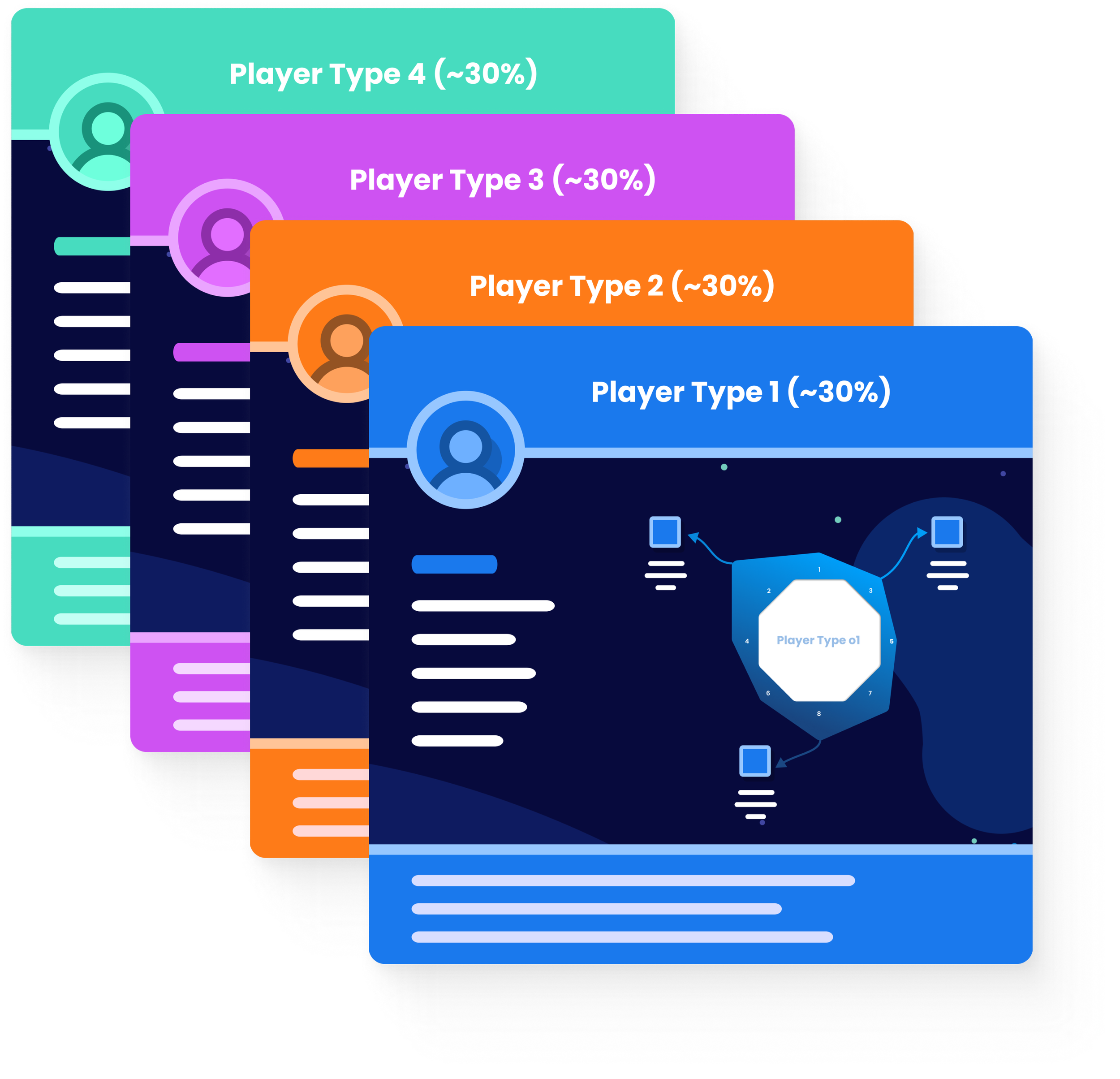
Players represent the users within the experience. For SplashLearn, in addition to the main user groups of students, parents, and school teachers, we further divide the student group into four player types. Every individual is motivated by different factors. In a learning environment, some students may be motivated extrinsically by tangible rewards or recognition. Others may be driven intrinsically by factors like autonomy or curiosity. Our role is to help SplashLearn identify the motivations behind each player type, and develop strategies that effectively inspire and engage users based on their unique motivations.
Desired Actions
The next step is to outline the Desired Actions that we want users to perform throughout their journey on the platform. We guide the client to list all Desired Actions across the user journey, from the discovery phase to onboarding, scaffolding, and endgame phase. No action is considered too trivial, as each contributes to the overall user experience and impacts the business metrics.
Feedback Mechanisms
Feedback Mechanisms are the communication channels that inform the players about their actions and progress, meanwhile prompting them to perform Desired Actions and stay engaged. Common Feedback Mechanisms include features like notifications, progress trackers, or performance reports. We assisted the client in listing out all their existing feedback mechanics. This list served as a foundation for the next step in our design process: Brainstorming. By doing so, we gain clarity on what's already in place and identify any potential gaps that need to be addressed.
Win-State
Win-state represents the outcome of players' success in completing Desired Actions. Every Desired Action should lead to a Win-State, providing a sense of achievement and fulfillment for the player.
Rewards
Rewards are often embedded in Win-State moments. Whether extrinsic like in-game currency or intrinsic like recognition, rewards reinforce positive behaviors and sustain engagement over time, enhancing the overall user experience. We asked SplashLearn to compile a list of their current rewards. As we transition to the Brainstorming step, we would then initiate discussions on potential new rewards tailored to user preferences based on the player type analysis. This approach helped create a personalized and effective reward system.
Brainstorming Solutions to Elevate User Engagement
{ Step 02 }
As shown at the beginning of this case study, we pinpointed many pain points during the experience audit. Now, with the goal and users of SplashLearn defined in the Strategy Dashboard, we started brainstorming ideas to solve these pain points and improve the engagement and interactivity of SplashLearn’s experience. We aimed to compile an extensive list of ideas to promote Desired Actions and consequently have a quantifiable impact on Business Metrics.
When brainstorming ideas, our approach focuses on the user and their motivation, rather than simply thinking about cool features. One of the fundamental questions we asked was how we could leverage the Octalysis 8 Core Drives to encourage users to take Desired Actions at various stages of their journey.
As an example, for users in the Scaffolding Phase driven by competition (Core Drive 2: Accomplishment & Core Drive 5: Social Influence), we focus on brainstorming features that cater to their desire for achievement and recognition, such as a leaderboard system. The leaderboard acts as a Feedback Mechanism, enabling users to monitor their progress on the platform. It engages competitive users by leveraging their inherent drives, encouraging them to aim for higher standings, and fostering a sense of accomplishment and social validation.
The scope of our brainstorming session explored beyond just Feedback Mechanisms. We considered various features aimed at motivating users to take desired actions, such as marketing content, rewards system, and more.
Brainstorming Rewards
In addition to using the Octalysis 8 core drives to brainstorm an effective reward system, we also employed the SAPS model developed by Gabe Zichermann (2011). The SAPS model, which stands for status, access, power, and stuff, provides a structured way to think about rewards and incentives. As you go from the top of the pyramid to the bottom, the reward becomes more expensive for the company to give out, but less compelling for the user.
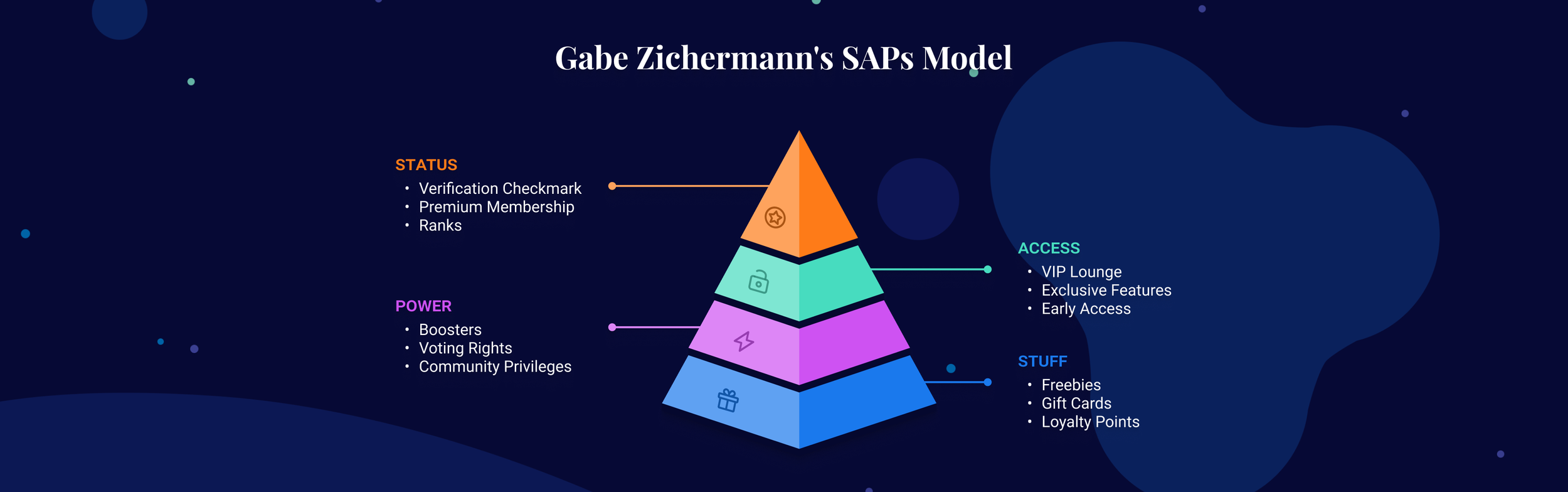
Many companies often rely heavily on giving out tangible rewards or "stuff" as incentives, assuming it will retain users. However, while freebies can be appealing, it's also the most expensive and least compelling type of reward. This approach sometimes results in companies overspending without achieving the desired outcomes.
However, this doesn't imply that tangible rewards are ineffective; rather, it underscores the importance of offering the right type of reward at the appropriate phase of the user journey. For instance, during the Discovery Phase, when attracting new users is crucial, offering a $10 gift card (stuff) can be an effective incentive. On the other hand, in the Endgame phase, where retaining loyal users is key, a Top Performer badge (status) might be more meaningful and motivating.
Brainstorming Boosters
During the experience audit, we highlighted SplashLearn’s challenge in user retention during the Scaffolding Phase. Recognizing this, our focus centered around brainstorming Boosters. Categorized as Power rewards, Boosters play a pivotal role in empowering users to perform Desired Actions more effectively. In SplashLearn’s experience, these Desired Actions are learning activities. When users enter the Scaffolding Phase, they start the loop of performing Desired Actions repeatedly. However, this repetitive nature can sometimes lead to a sense of monotony or disengagement.
Boosters in gamification can take various forms. Our repertoire consists of many different varieties. They could be temporary power-ups that enhance a user's abilities for a limited time, allowing them to complete tasks faster or earn more rewards. They could also be permanent upgrades that users unlock as they progress.
Implementing Boosters strategically involves understanding the user journey and identifying key points where users might experience fatigue or disengagement.
For example, if users typically lose interest after completing a certain number of learning activities, introducing a Booster that provides extra rewards for them to tackle challenges could re-engage them. Similarly, if users struggle with a specific type of activity, offering a Booster that provides hints or extra practice opportunities could help them overcome obstacles and stay motivated.
Together with SplashLearn, we generated over 200 ideas. While having a plethora of ideas is beneficial, it's crucial to consider moving forward the capacity of the development resources. The next phase of our process will be dedicated to prioritizing these ideas and creating a breakdown view that outlines what SplashLearn will look like through different versions of its development.
Prioritizing Using the P/E Feature List
{ Step 03 }
To ensure a balanced approach that maximizes impact and maintains feasibility, we use the P/E Feature List to prioritize ideas we generated during the brainstorming sessions, enabling SplashLearn to make informed decisions about which features to integrate into their product roadmap.
"P/E" stands for Power and Ease, with each element representing crucial dimensions in evaluating the potential impact and feasibility of a given feature.
The "Power" score signifies the degree to which a feature promotes the Desired Actions among users. It encapsulates how effectively the feature enhances SplashLearn’s user experience and aligns with their Business Metrics.
Meanwhile, the "Ease" score reflects the ease of implementing the feature within SplashLearn’s capacity. This metric considers factors such as technical complexity, resource requirements, and compatibility with the overall design architecture.
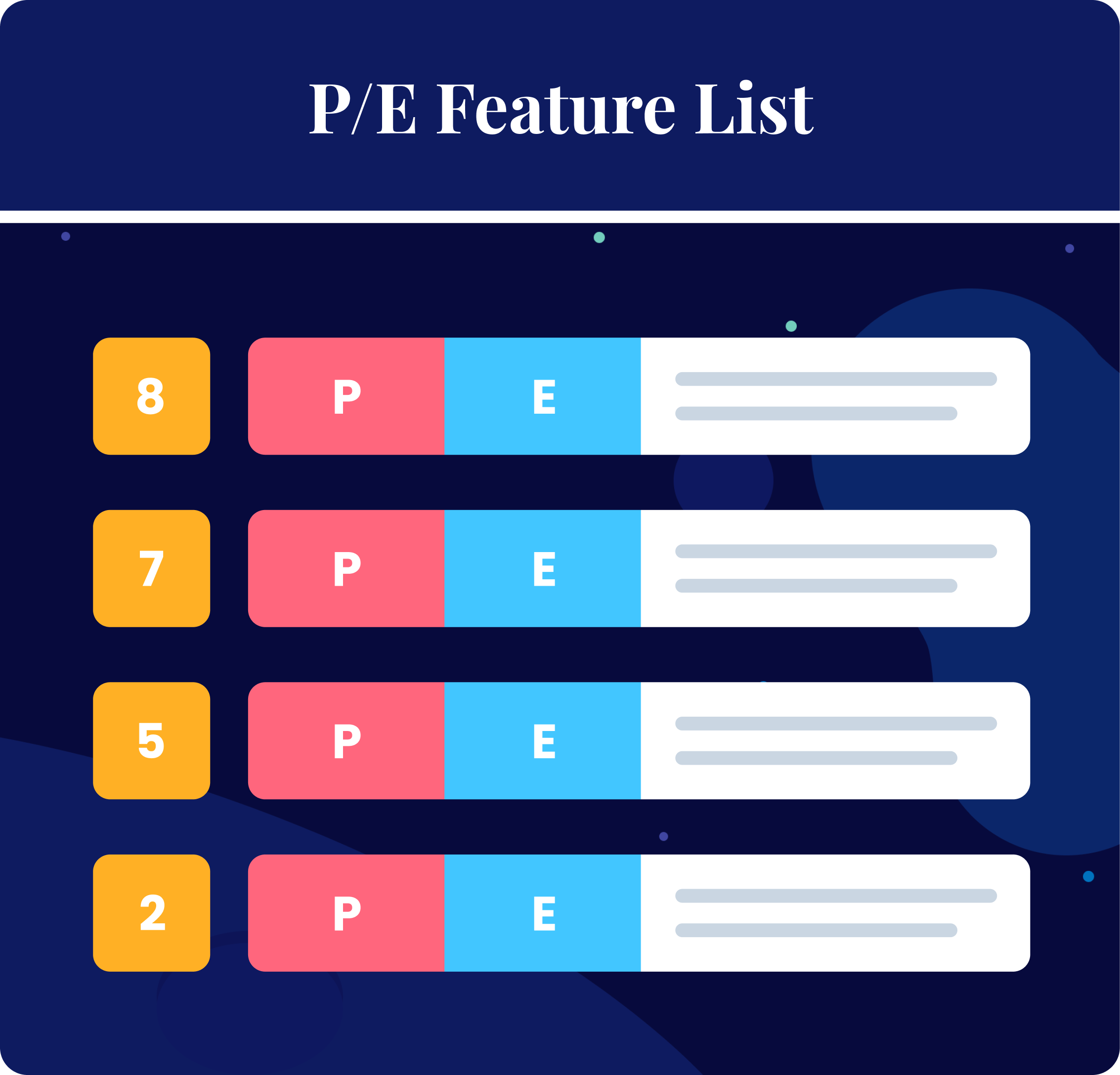
For instance, using augmented reality (AR) in learning activities can be appealing as it piques user curiosity. However, its implementation can pose technological challenges. Consequently, despite its potential high Power Score, when paired with a low Ease Score in the formula, the overall priority score remains relatively low. As a result, integrating AR features will be less prioritized on the list.
While features are evaluated via the Power and Ease Scores, we also have other scoring systems for Desired Actions and Rewards:
Desired Actions
We evaluated and scored desired user actions based on their importance to drive SplashLearn’s key Business Metrics at different phases of the user journey. For instance, in the Discovery Phase of SplashLearn, the Main Desired Action is for users to click on the download button. As such, this action would receive a high score due to its critical role in user acquisition, hence the product's success.
Rewards
Rewards are evaluated based on their perceived value to users and their viability within the company's resource constraints. While a $100 cash reward might be highly incentivizing for users, it is probably not sustainable for a company to offer at scale due to resource limitations. Balancing the perceived value for users with the company's ability to deliver these rewards is crucial in designing effective incentive mechanisms that drive desired behaviors without compromising profitability.
By employing these prioritization strategies, we ensured that our design decisions were aligned with SplashLearn’s business objectives and parameters. Next, we will explore how we define detailed information on the features we decided to implement into SplashLearn’s experience.
{ Step 04 }
Defining Details in a Battleplan
This step plays a critical role in developing the features we chose to implement earlier. Typically, we create a Battleplan using a Google Sheet where each tab contains essential details for the development team to effectively create the feature in a gamified system. For instance, the tab dedicated to the leveling system includes information such as the number of levels, the required experience points (EXP) for each level, and the rewards or power unlocks associated with each level.
Sources and Sinks
A crucial aspect to focus on in this step is balancing SplashLearn’s gamified system’s economy, which involves defining sources and sinks. Sources refer to how users earn in-game currency, like completing learning activities, achieving milestones, or participating in special events. Sinks are how users spend or return that currency back into the system, such as purchasing virtual goods or accessing advanced features. In the sources tab, we detailed all the ways users can earn currency on SplashLearn, along with the expected daily amount and total accumulation over time. Similarly, in the sinks tab, we listed the items users can purchase on SplashLearn, along with their functions and effects. These virtual items range from pure virtual decorations to Boosters designed to temporarily enhance users' abilities to level up or earn currencies.
With this information, we can simulate users’ wealth accumulation in SplashLearn. For instance, an average user will gain 15 coins by completing 3 learning activities and achieving a milestone per day. If a powerful Booster costs 150 coins, they will be able to afford it after 10 days on SplashLearn. This simulation is important because it helps us validate whether the economy we design is sustainable.
Balance an Economy that has Boosters
Introducing Boosters added another layer of complexity to SplashLearn’s gamified system’s economy. Boosters empower users to perform Desired Actions more effectively, however, if boosters are too potent or easily accessible, they can disrupt the economy's equilibrium by inflating in-game currency or diminishing the value of rewards and achievements.
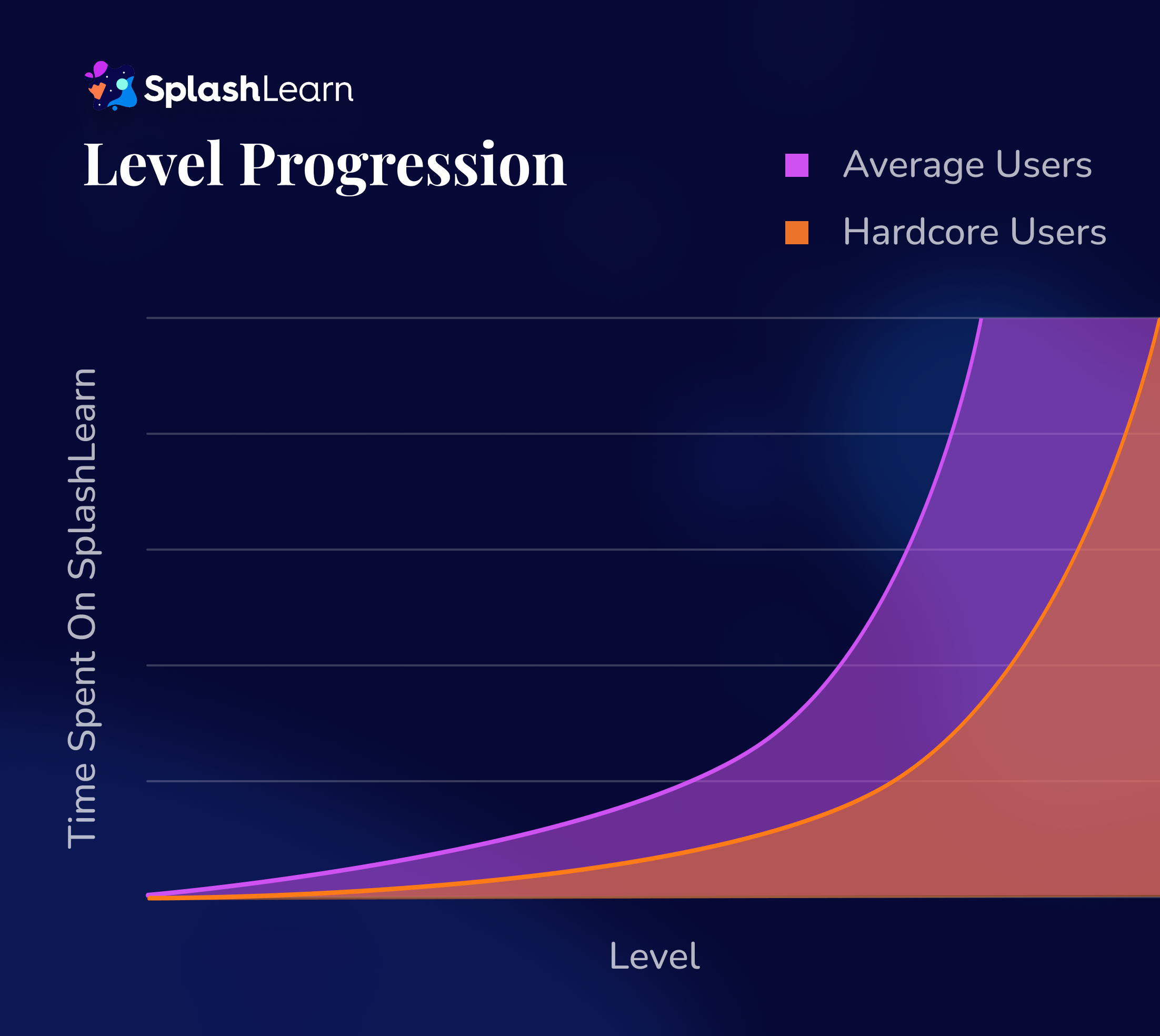
Therefore, to validate and refine the metrics of the system’s economy, we built a simulation tool in Google Sheets to model user progression and economic dynamics. In this simulation, we focused on two user types: average users and power users, distinguished by their frequency and duration on SplashLearn. This segmentation enabled us to design a balanced economy that presents meaningful challenges for both types of users.
The primary goal of this approach was to ensure that power users do not progress too rapidly in terms of levels achieved or wealth accumulated. This deliberate pacing is vital to allow power users to find their interactions and accomplishments within the system genuinely meaningful and rewarding. Simultaneously, we aim to avoid overwhelming average users, as it could lead to frustrations and potentially cause them to disengage or even quit the platform.
The graph on the right illustrates the stimulation on the progressions of both types of users in SplashLearn’s new leveling system. We aim to see a progression curve that is neither too steep nor too gradual, offering a rewarding and steady journey for users as they advance through the levels.
Transform an Activity Loop into a Gameloop
In the previous phase, we prioritized and selected features and rewards to include in SplashLearn’s product roadmap. With these decisions made, we proceeded by transforming SplashLearn's activity loop into a Gameloop. Implementing all features at once isn't feasible, so we created multiple Gameloops to account for this. Each version aligned with SplashLearn's implementation stages. Below is an example of SplashLearn's V1 Gameloop. You can see that Boosters have the capacity to increase users' motivation to return and repeatedly perform Desired Actions. When coupled with Feedback Mechanisms that track users’ progress and prompt them towards Desired Actions, the entire experience has been elevated to new levels of engagement and interactivity. This enhancement leads to a more rewarding and satisfying user journey overall.

Up next is the final step of our design process: Wireframing, where we transform ideas we generated and defined into tangible prototypes.
{ Step 05 }
Visualizing Ideas with Wireframes
Wireframes encapsulate the functionality, layout, and interactivity of the digital experience we are creating. However, our approach to wireframing goes beyond mere visual representation.
Through our collaboration with SplashLearn, we gained a profound understanding of their vision, as well as insights into user motivations. Our wireframes were tailored to align with SplashLearn's vision while strategically resonating with user motivations to drive Desired Actions.
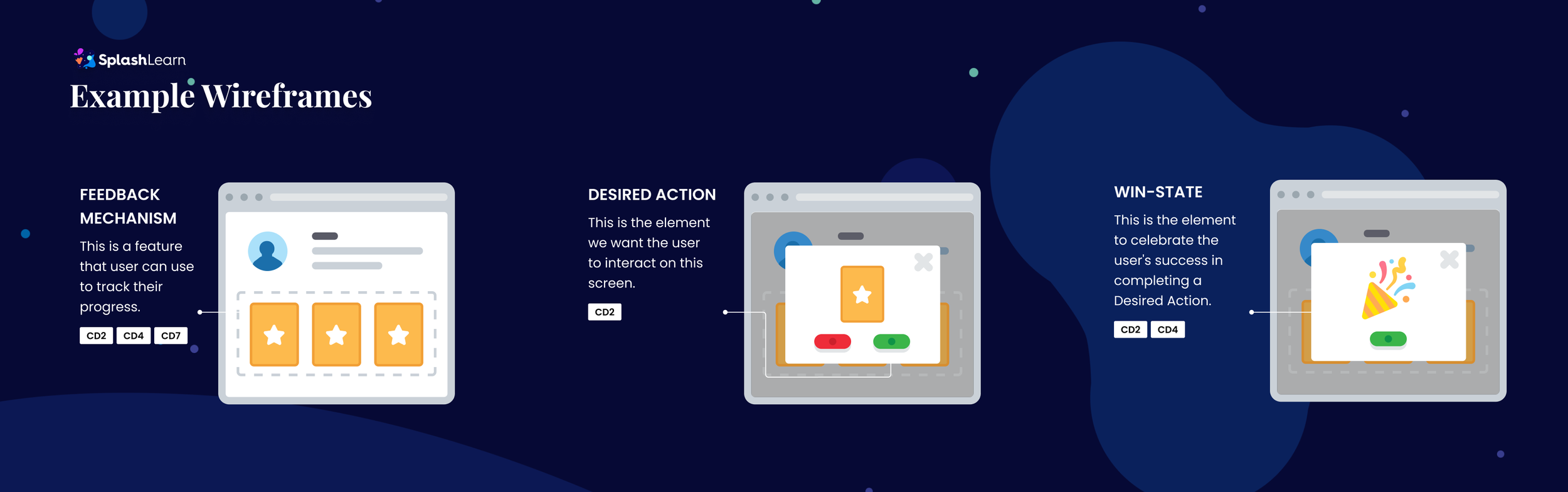
We used the Octalysis 8 Core Drives to guide us in crafting a captivating and interactive experience for SplashLearn. In the example below, we illustrate how each wireframe element, from buttons to progress indicators, is strategically placed to leverage these Core Drives, creating an experience that not only looks aesthetically pleasing but most importantly drives Desired Actions. Our final deliverables included high-fidelity wireframes and interactive prototypes. However, since the product is still under development, I can only provide an example in low-fidelity.
Active Listening to Understand Client’s Vision
Cross-cultural Collaboration
Teach the client how to apply gamification theories to practice
Use visuals to explain complicated concepts
Key Takeaways
Umang Jain, Co-Founder of SplashLearn