Stop Customer Churn:
What Your Loyalty Program Can Learn from Roguelike Games
Scroll ↓
TL;DR
Roguelikes hook people because every death is progress, every choice is a power-up, and every return unlocks something new. Apply this same thinking to your loyalty program and turn it from just another discount machine into something members genuinely want to engage with.
Loyalty? Or just the nearest reward?
One of the biggest challenges businesses face with loyalty programs is sustaining long-term customer engagement. Most customers nowadays are not loyal to the brand itself; they are loyal to whichever brand offers the best reward. According to BCG's 2024 global loyalty study, US consumer engagement with loyalty programs has dropped 10% since 2022, and loyalty has dropped by 20%.
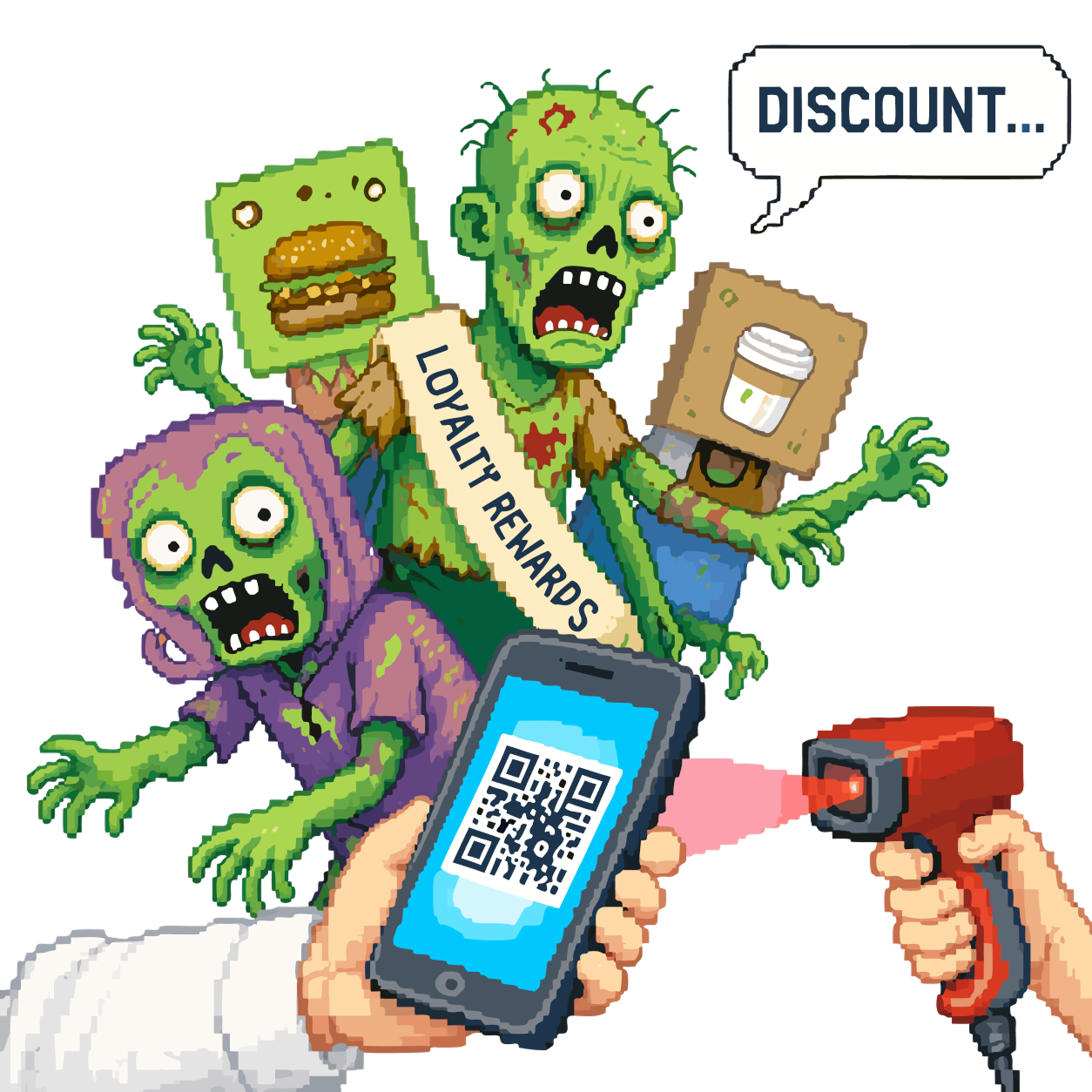
Yet many companies still expect that points, discounts, and welcome bonuses can create loyalty, when most loyalty apps become zombie apps on people's phones, opened only at the checkout counter to scan a QR code.
This is described in the Chinese proverb 本末倒置 (běn mò dào zhì), which means reversing the cause and effect. Loyalty should happen before the purchase, guiding the customer to instinctively prefer yours over the brand next door.
So what do roguelike games have to do with this?
What roguelikes have that your program doesn't
Roguelike games are one of the most successful and replayable genres in modern gaming. Players repeatedly die yet return obsessively for “just one more run.” While this may sound far removed from loyalty programs, roguelikes have mastered one of the hardest problems in customer retention: how to keep people coming back voluntarily over and over again. In this sense, they encapsulate how your loyalty program could boost engagement with a few simple shifts in design.
What makes these games so addictive is the psychological loop behind them. Roguelikes combine three engagement mechanics that decades of behavioral research have linked to durable habit formation: variable rewards, player agency, and visible progression.
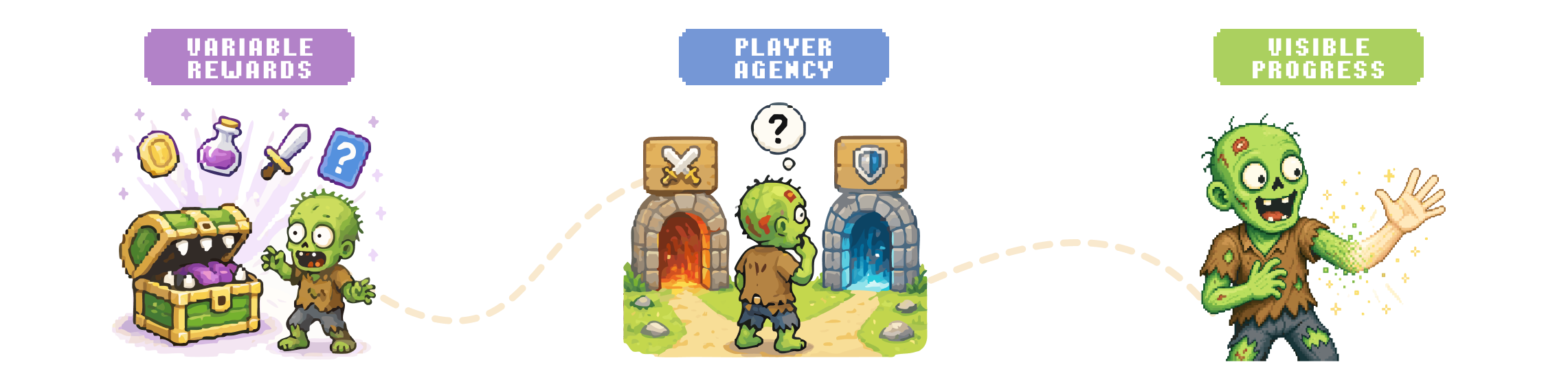
First, every run offers different encounters, upgrades, or rewards. Players never know exactly what they will get next, which creates anticipation and curiosity. This is the variable reward principle that B.F. Skinner identified in the 1950s, and it remains one of the strongest known drivers of repeat behaviour.
Second, players have meaningful agency and experience instant feedback. They can experiment with different strategies, optimise builds, and make decisions that shape each run. Autonomy of this kind sits at the core of Deci and Ryan's self-determination theory as a primary source of intrinsic motivation.
Third, progression is constantly visible. Even after failure, players unlock new powers, discover stronger weapons, or push slightly further into the dungeon than before. They work harder, time after time, as they approach the final boss. This is the goal-gradient effect proposed by behaviourist Clark Hull in the 1930s, where people increase their efforts to achieve a goal as they get closer to it.
Traditional loyalty programs offer none of the three. The reward is fixed. The progression is linear and slow. The agency is limited to "spend more, earn more." That structure produces reward dependency, which looks like loyalty in a dashboard but evaporates the moment a competitor runs a better promotion.
Roguelike games provide a useful contrast here because they combine all three mechanics into a tightly designed engagement loop. The same principles that have captivated billions of players worldwide can be applied to loyalty programs.
Traditional Loyalty Program
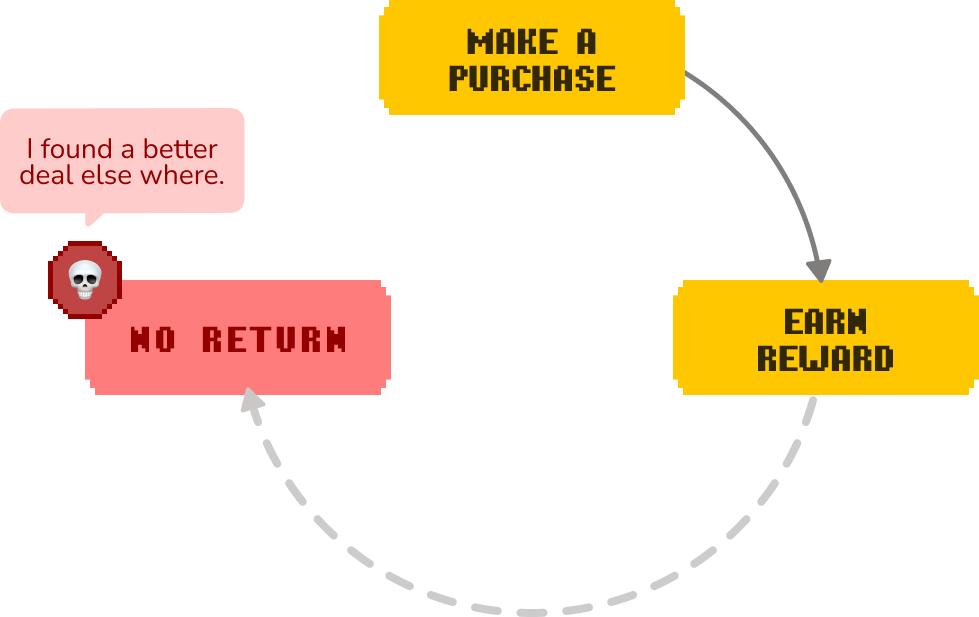
Roguelike Games
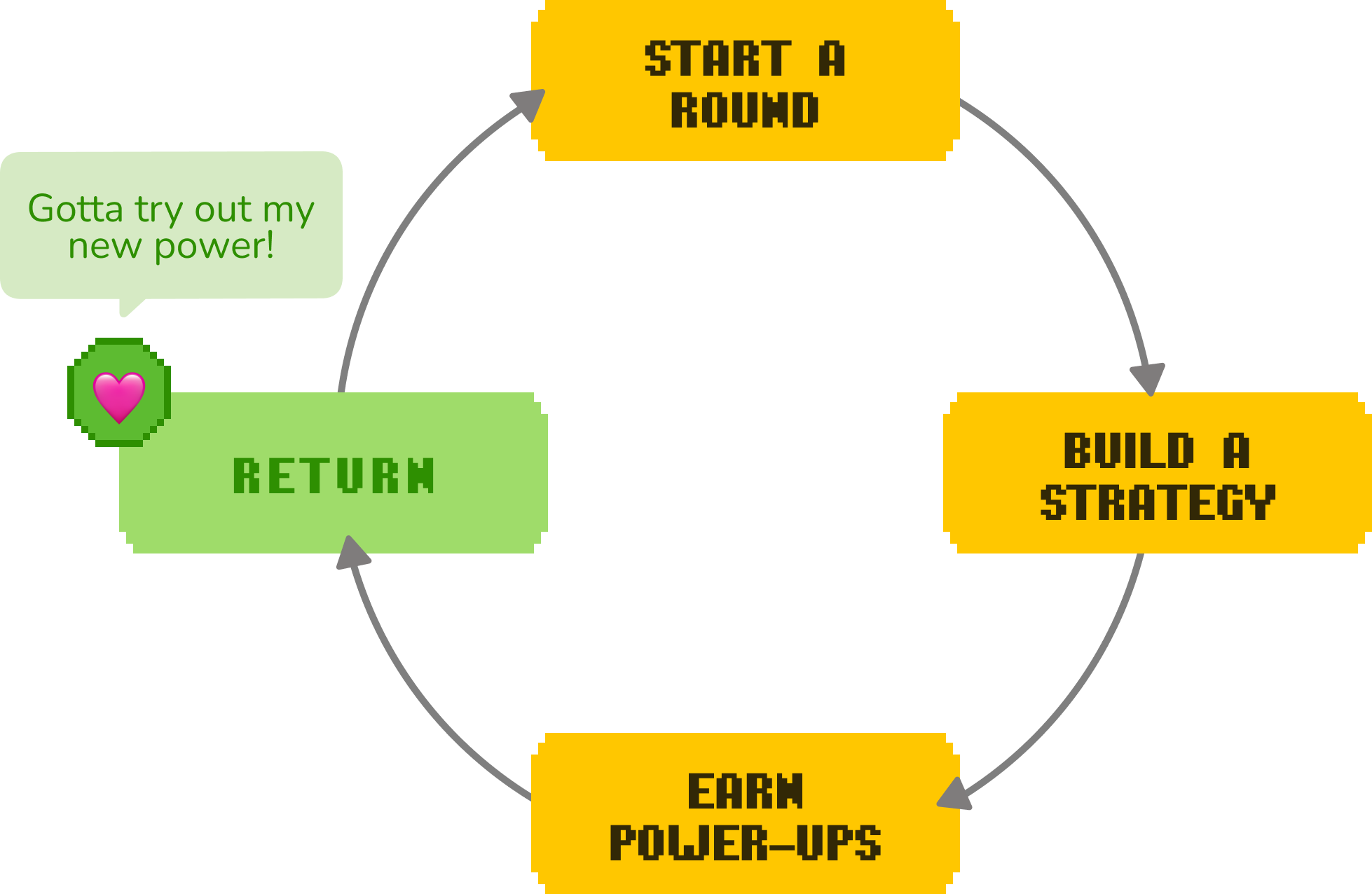
Beyond the core loop itself, here are three inspirations from three award-winning roguelike games that can inspire your loyalty program design.

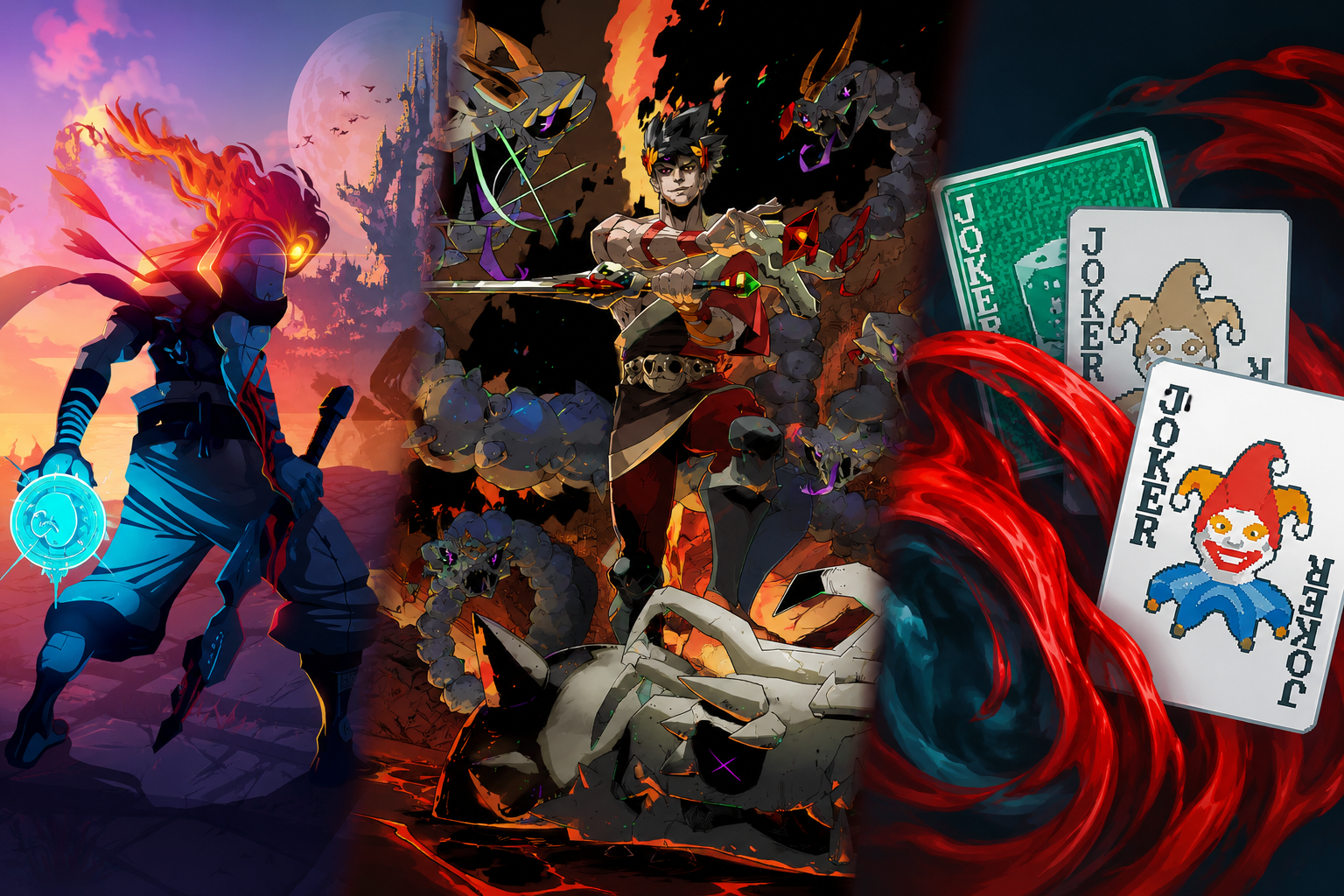
Balatro: Skipping a reward can be the reward
{ Inspiration 01 }
Balatro is a poker-meets-roguelike that has sold over 5 million copies since 2024.
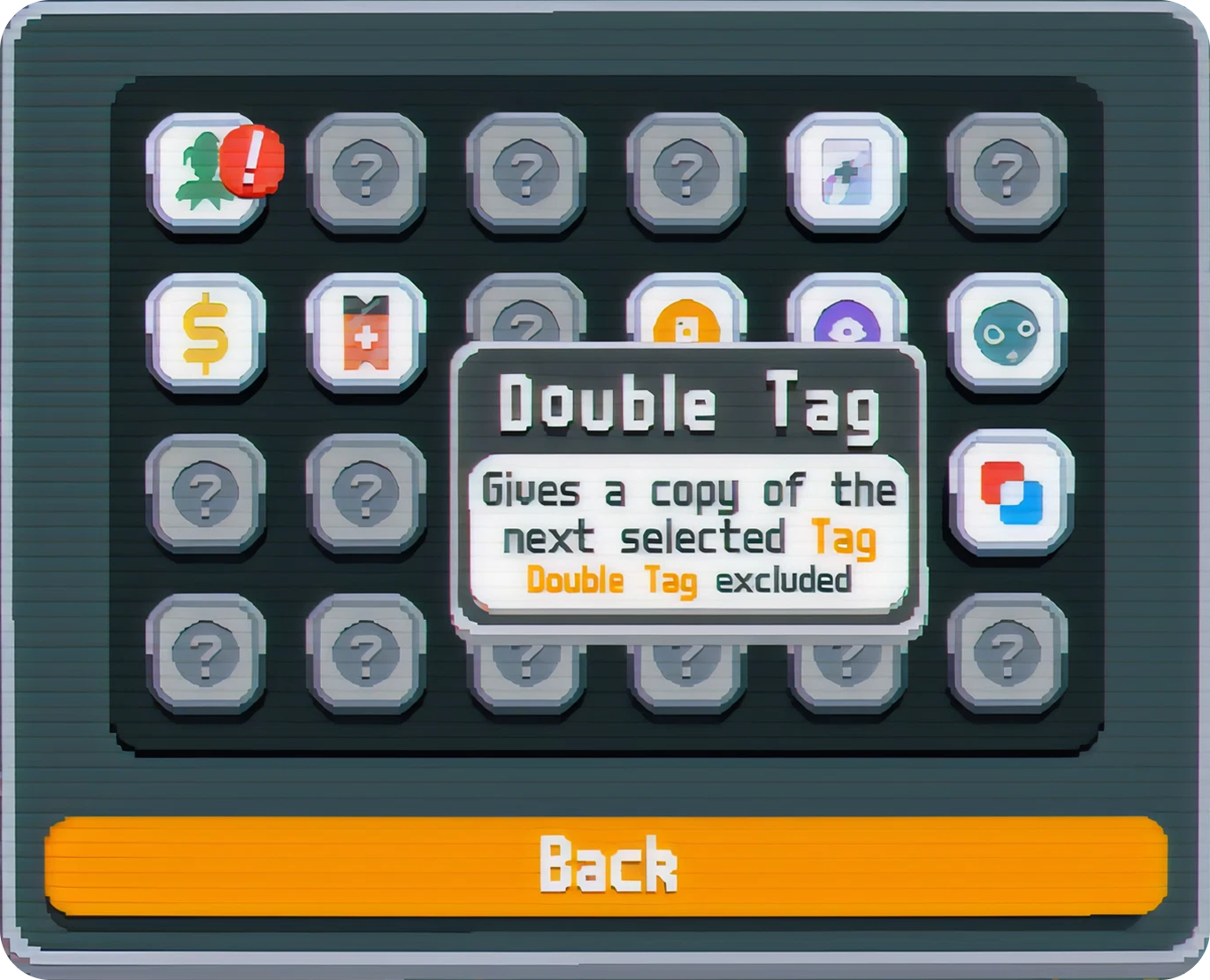
For every round, the player can take the blind and cash out, or skip the round and pick up a modifier (called a "tag") that supercharges a later round. Sometimes the tag is small. Sometimes it compounds and changes the entire run.
There the player sits, contemplating and strategising. Is it more beneficial to skip now, or take the blind and cash out?
The loyalty lesson:
Not every member wants the small, instant reward. Give them an alternative path that rewards playing the long game. Turn flat redemption into "save and stack" strategy play, or add a social layer where members can skip and gift their reward to a friend, unlocking a bigger future reward for themselves or earning entries into a grand prize pool.
Building strategic depth into your program gives members a sense of agency and ownership, and that personal investment is what makes them hard to walk away from.

Hades: Every return reveals something new
{ Inspiration 02 }
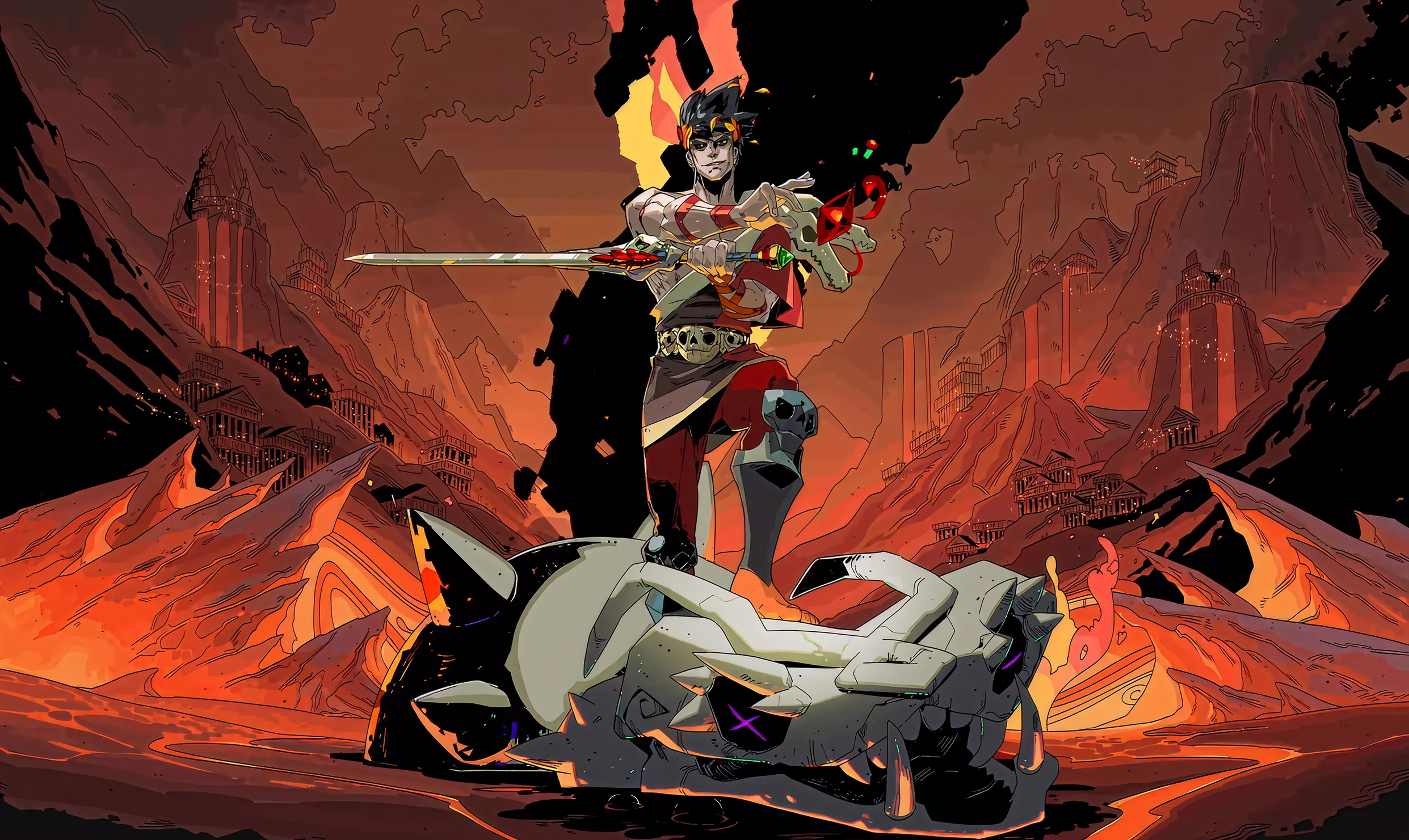
While Balatro shows how to reward deferred gratification, Hades shows how to reward return itself.
Hades won nearly every Game of the Year award in 2021, and the 2024 sequel generated over 55 million USD in revenue during early access alone.
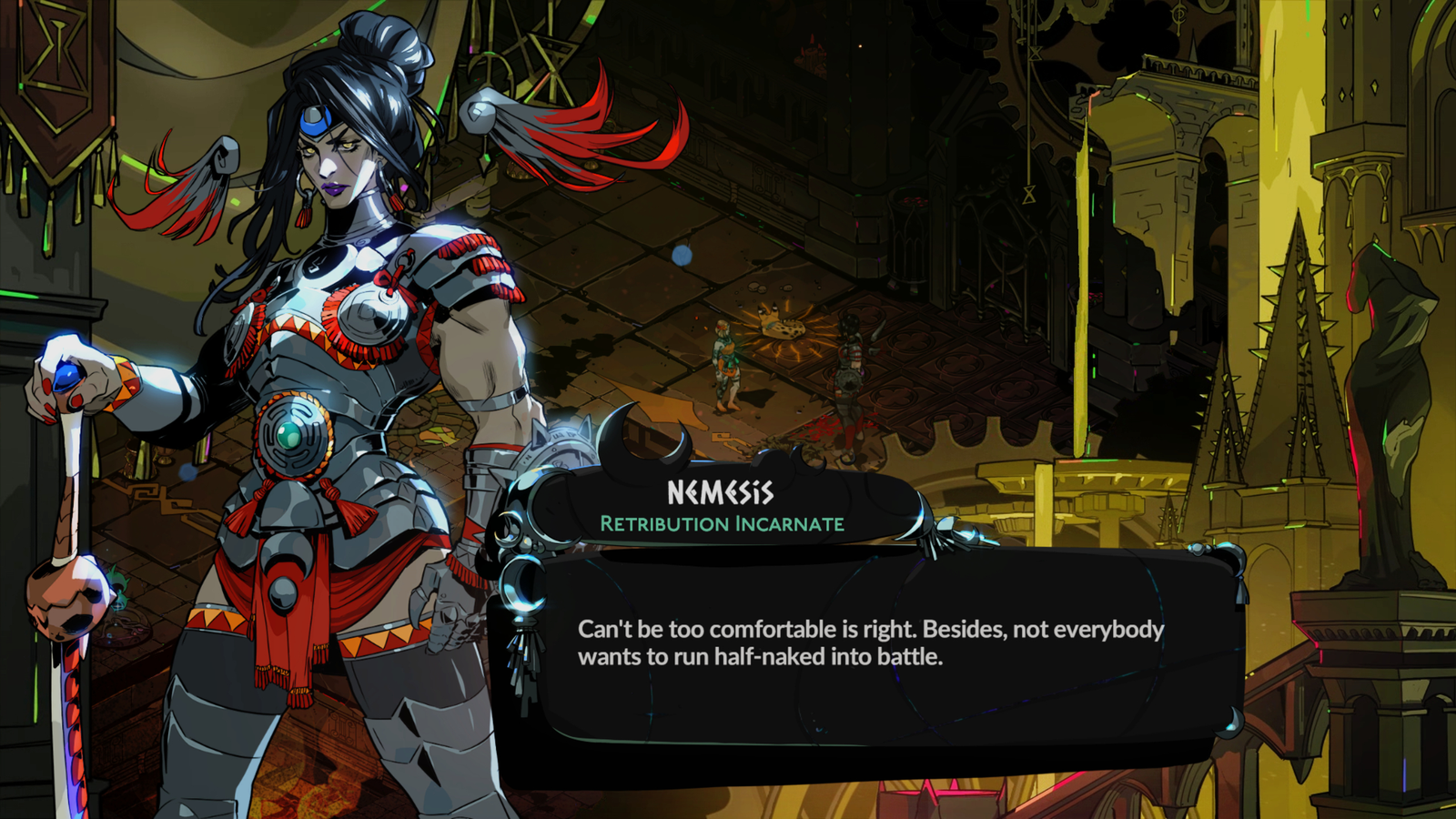
In Hades, every failure pushes the story forward. Every escape attempt ends in the inevitable death. But every time the player dies, new storylines unlock, new characters and dialogue appear, relationships deepen, and permanent upgrades stack.
The loyalty lesson:
Frequency is one of the strongest predictors of customer lifetime value, and the reason is mental availability. Brands that touch their customer between purchases build mental availability, and mental availability is what determines who gets picked at the moment of decision.
Reward frequency, not just spending. Every visit should reveal something worth coming back for: a new perk, a personalised message, the next beat in a story your brand is telling, or a surprise dialogue. Make the in-between moments matter, and transactions stop being the only reason members engage with you. Engagement becomes a habit, and habits become loyalty.

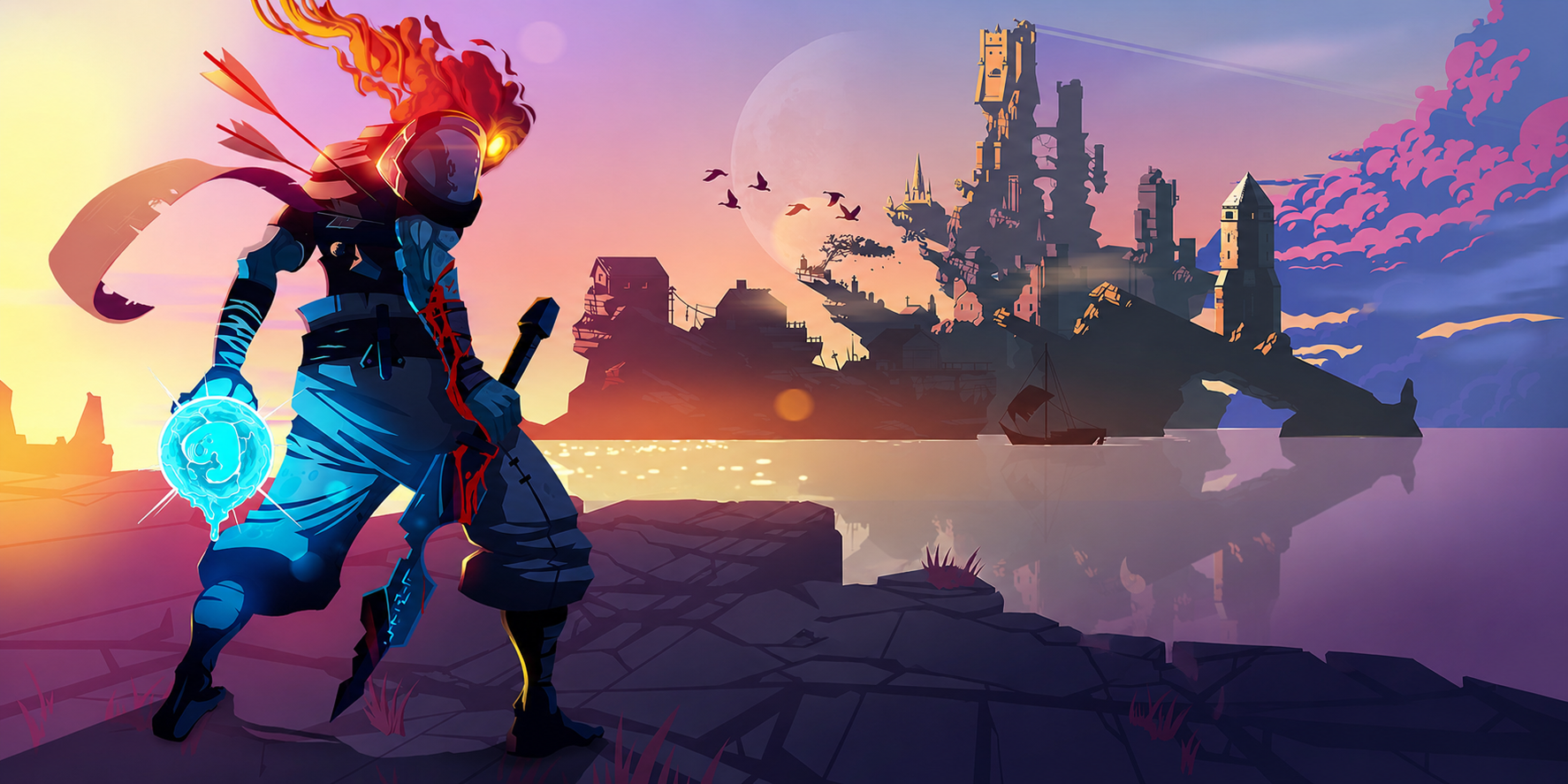
Dead Cells: Let your members pick their path
{ Inspiration 03 }
Dead Cells has sold over 10 million copies since its 2017 launch, outselling most AAA titles of its era.
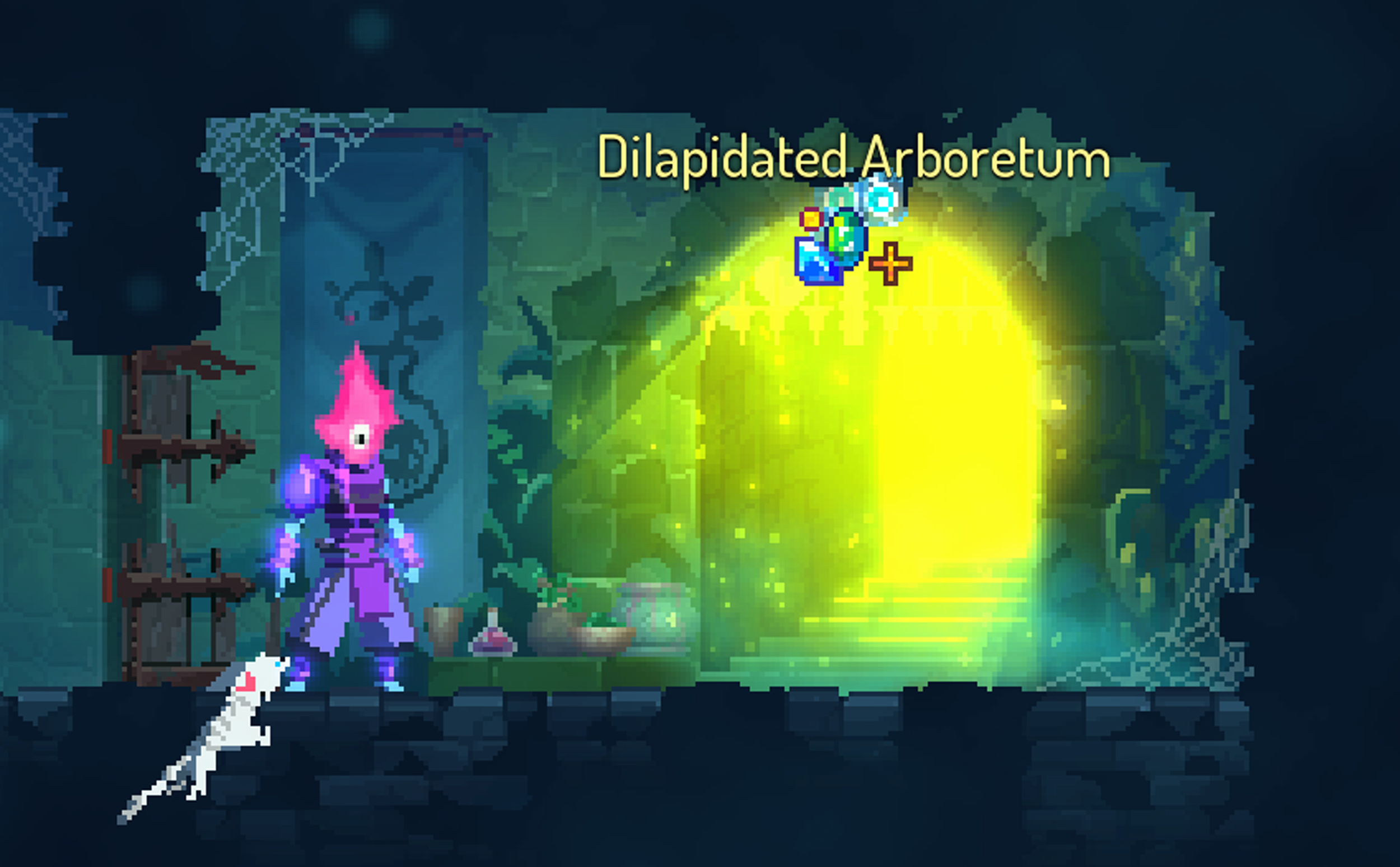
The mechanic worth noticing is branching. The player progresses through the game by entering different biomes. One biome is harder but pays better. Another is easier but hides rare weapons. Sometimes it is a new door the player has never opened, prompting them to explore. It is the same game and the same final boss, but the journey is composed by the player.
The loyalty lesson:
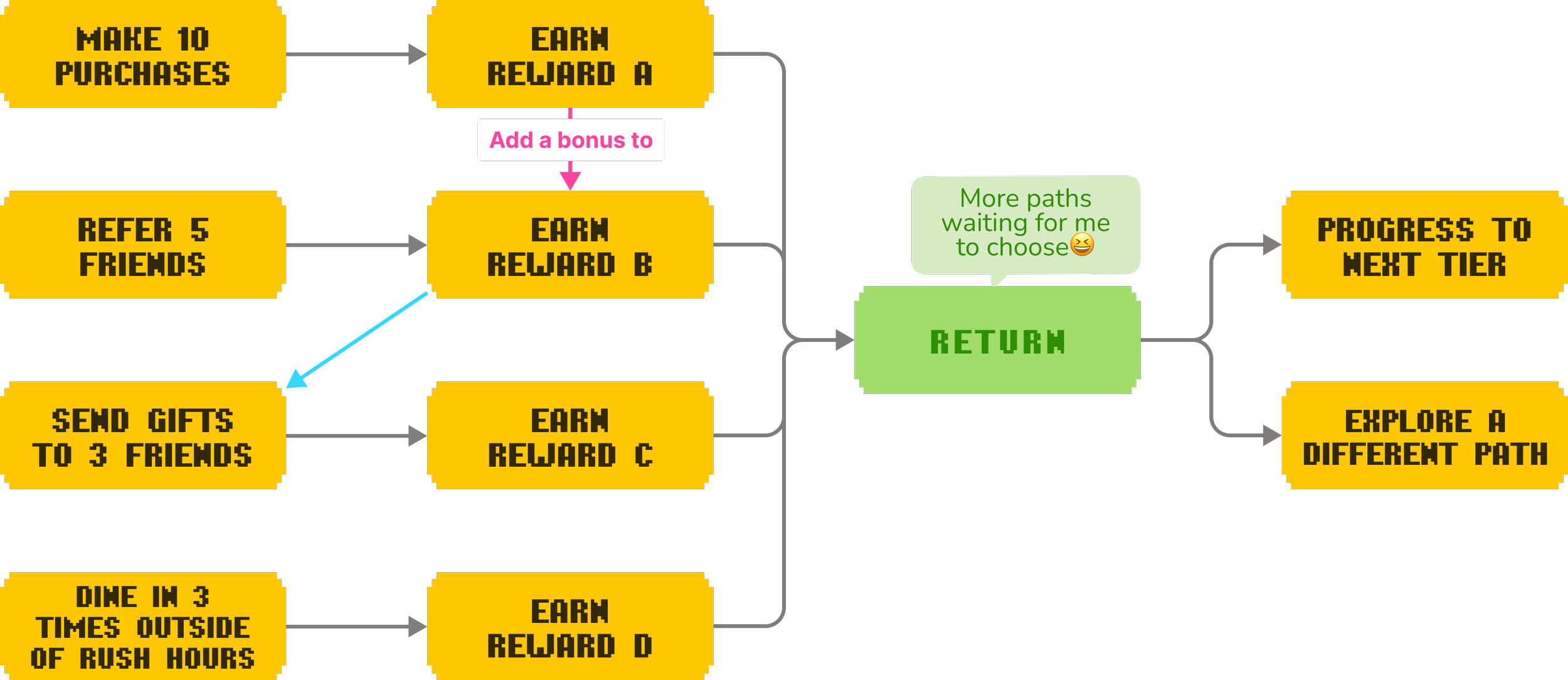
Your members aren't one persona. They have different goals, preferences, and motivations. Give your customers different routes to value, and let them choose which action or reward to take. Let them build a personalised bundle of rewards from the perks they actually care about, and invest in actions that suit their preferences.
Where is your program leaking engagement?
If your loyalty app is only opened at checkout, you have a retention problem, not a rewards problem. Most programs don't need more discounts. They need a stronger engagement loop that gives customers reasons to return and invest in the brand.
Our Loyalty Engagement Loop Review identifies where your member journey breaks down and pinpoints the highest-leverage changes to improve retention within your existing stack.
Curious how it would play out for your program specifically?